
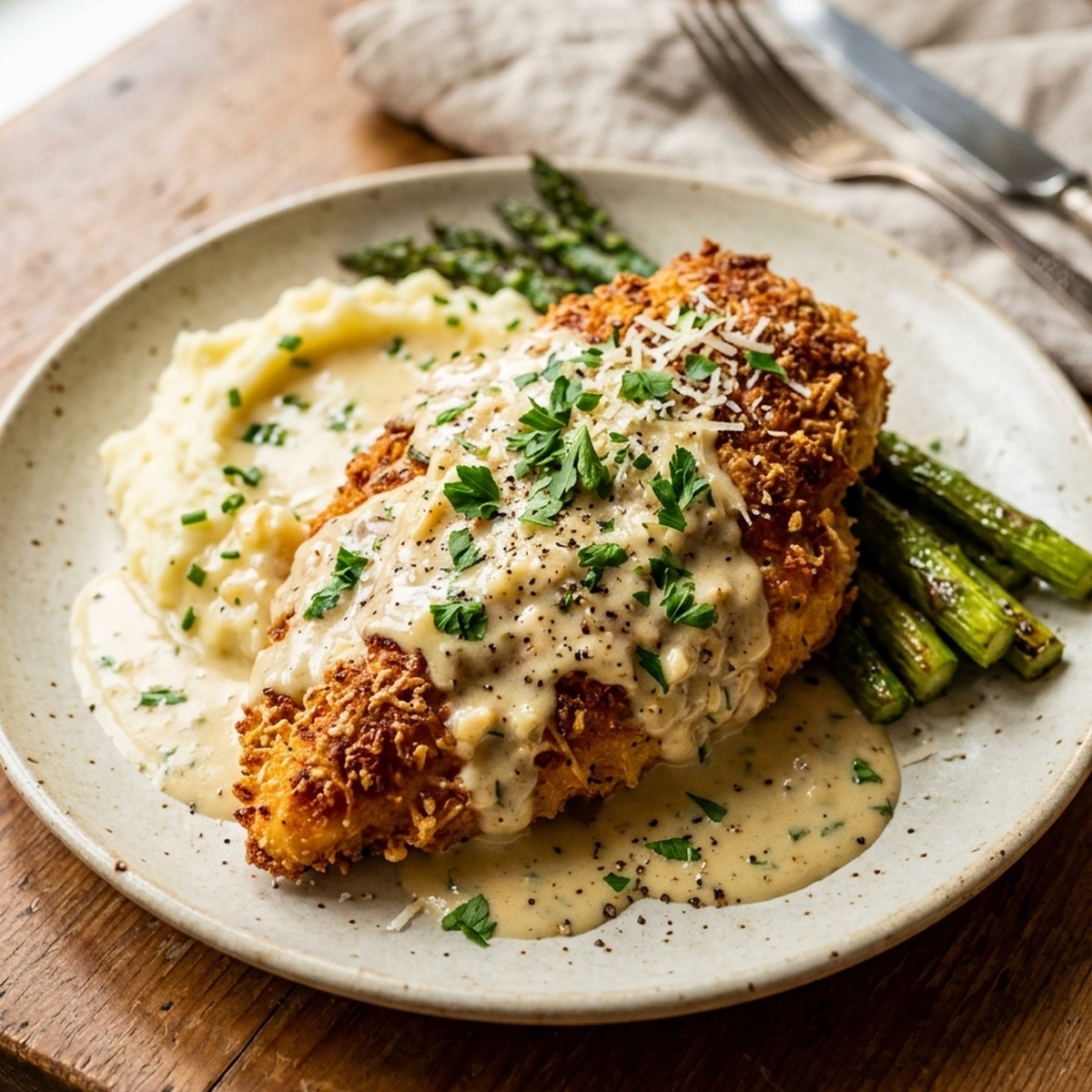
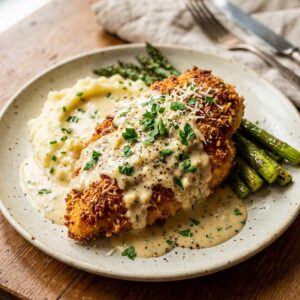
Parmesan Crusted Chicken With Creamy Garlic Sauce is a crisp skillet chicken dinner with a Parmesan-panko coating, tender chicken, and a warm garlic cream sauce. This recipe gives you the comfort of creamy chicken with enough structure to serve on a busy weeknight or a relaxed family dinner. I like that the coating stays simple, using grated Parmesan and panko, while the sauce brings everything together with garlic, Italian seasoning, and a little extra Parmesan. Spinach is optional, but it adds color and softens right into the sauce without making the meal feel complicated. Serve the chicken straight from the skillet with the sauce spooned around the crust so every bite has crisp edges and a creamy finish. It is practical, filling, and easy to plate.
| Serving Breakdown | |||
|---|---|---|---|
| 49gProtein | 28gFat | 11gCarbs | 520Calories |
Nutrition values are estimated per serving and may vary based on ingredients, brands, and portion size.
Why You’ll Love This Parmesan Crusted Chicken With Creamy Garlic Sauce
This skillet chicken is crisp, creamy, and practical enough for a family dinner. Here’s why:
- Crisp Parmesan coating: Panko and grated Parmesan create a golden crust without a long breading station, so the chicken feels special while staying manageable for a weeknight.
- Rich garlic sauce: Garlic, cream, Italian seasoning, and Parmesan simmer into a smooth sauce that tastes cozy without needing many extra ingredients.
- Flexible cream choice: Light cream keeps the sauce softer and a little less rich, while heavy cream gives it a thicker, more classic skillet finish.
- Family-style serving: The chicken can be served over pasta, potatoes, rice, or vegetables, which makes it useful when everyone wants a different side.
- Optional greens: Spinach folds into the sauce at the end, adding color and a tender bite without changing the main Parmesan garlic flavor.
Ingredients You’ll Need
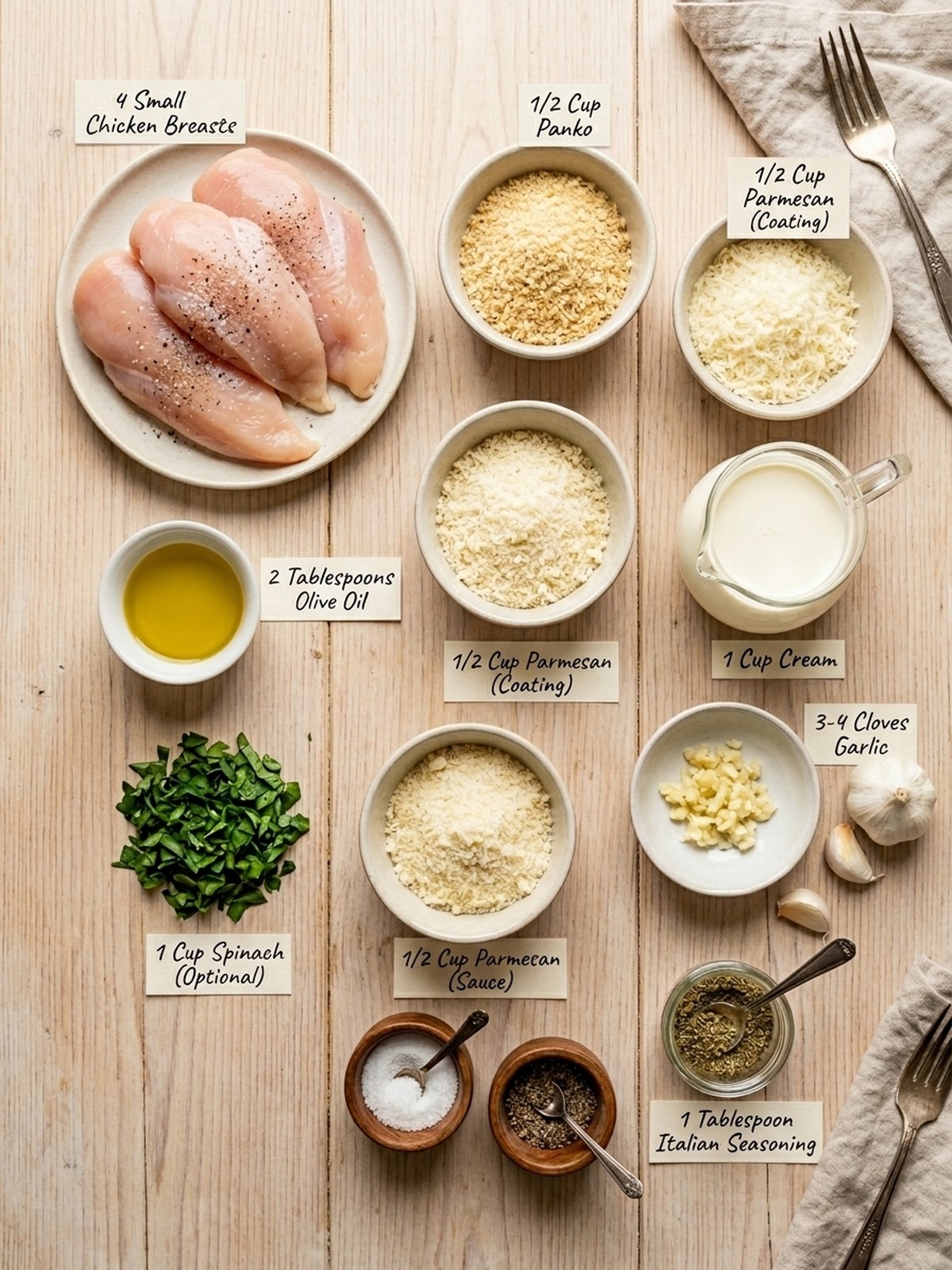
- Chicken breasts (4 small-medium or 2 large, halved): Use even pieces so they cook at the same pace. If the breasts are thick, slice them in half horizontally or pound lightly before coating.
- Salt and pepper (to taste): Season both sides of the chicken before adding the crust. This keeps the chicken itself flavorful, not just the coating and sauce.
- Olive oil (2 tablespoons): Oil helps the Parmesan-panko coating brown in the skillet. Use a little to coat the chicken and the rest for cooking.
- Grated Parmesan cheese for coating (1/2 cup): Finely grated Parmesan blends best with the panko and helps build a savory crust that browns quickly.
- Panko breadcrumbs (1/2 cup): Panko gives the coating a lighter crunch than regular breadcrumbs. Press it firmly onto the chicken so it holds during cooking.
- Garlic (3-4 cloves, minced): Fresh minced garlic gives the sauce its main flavor. Keep the heat moderate so it softens without turning bitter.
- Light cream or heavy cream (1 cup): Light cream makes a softer sauce, while heavy cream gives a thicker finish. Either one works with the Parmesan.
- Italian seasoning or oregano (1 tablespoon): This adds herby warmth to the garlic sauce. Oregano alone works well when you want a simpler pantry version.
- Grated Parmesan cheese for sauce (1/2 cup): Stir this in after the cream warms so it melts smoothly. It thickens the sauce and deepens the savory flavor.
- Spinach, chopped (1 cup, optional): Add spinach near the end so it wilts gently into the sauce. It brings color and works well with the creamy garlic base.
Before You Start
- Even thickness: Halve large chicken breasts or pound them gently so the crust browns before the center overcooks.
- Dry surface: Pat the chicken dry before seasoning. A dry surface helps the oil and Parmesan-panko coating cling better.
- Medium heat: Keep the skillet at medium heat so the crust turns golden without scorching the Parmesan.
- Thermometer ready: Use an instant-read thermometer if possible, since chicken breast is best when cooked to 165°F.
I like to spoon the sauce around the chicken instead of pouring it over the top right away. That keeps the crust crisp while still giving every serving plenty of creamy garlic sauce.
How to Make Parmesan Crusted Chicken With Creamy Garlic Sauce
- Step 1 – Prep Chicken: Pat chicken dry, halve thick breasts if needed, then season both sides with salt and pepper.
- Step 2 – Mix Coating: Stir Parmesan and panko together in a shallow bowl until evenly combined.
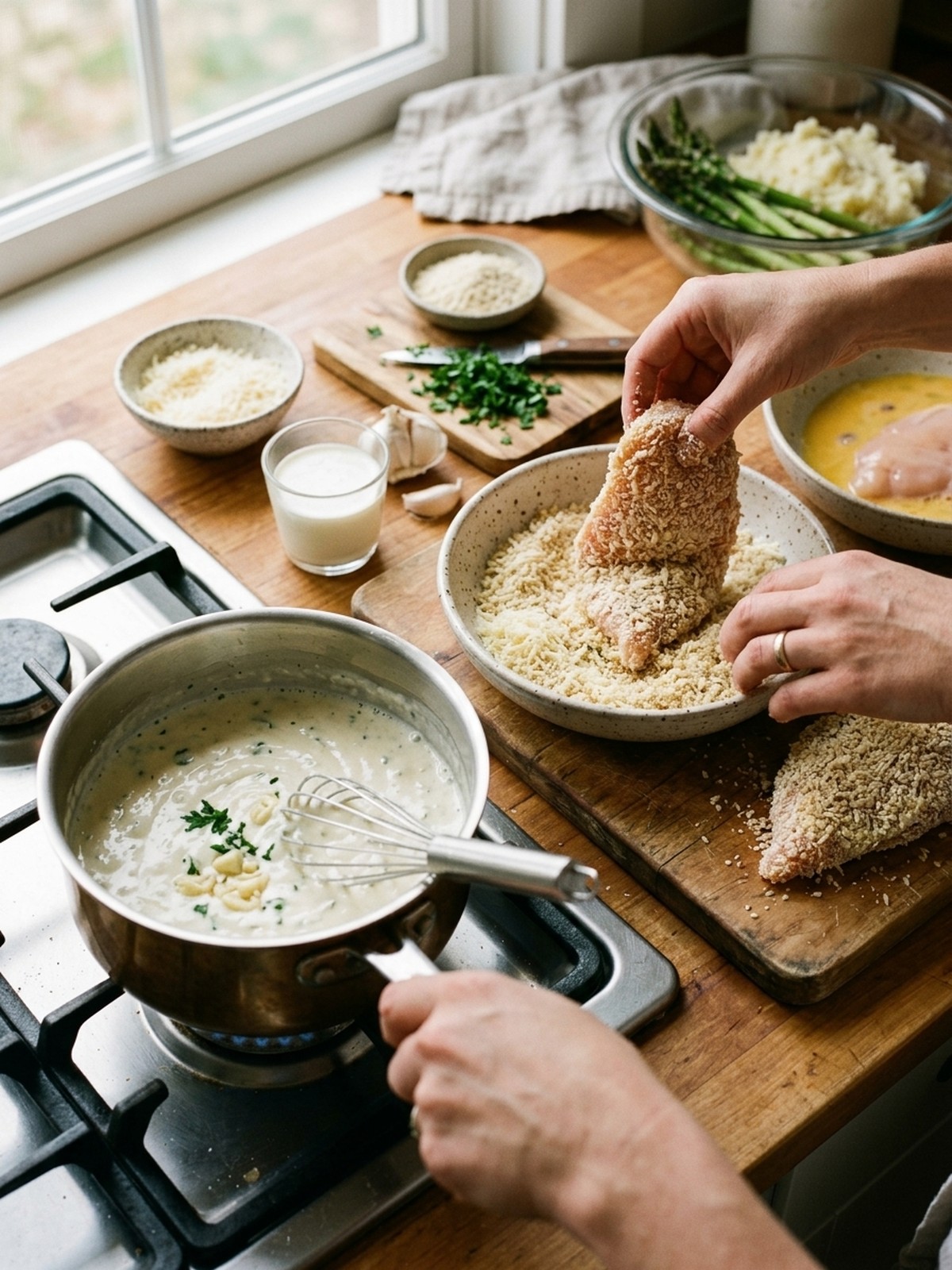
- Step 3 – Coat Chicken: Brush chicken lightly with olive oil, then press the Parmesan-panko mixture firmly onto both sides.
- Step 4 – Sear Crust: Heat remaining oil in a large skillet and cook chicken until golden on both sides.
- Step 5 – Finish Chicken: Continue cooking until the center reaches 165°F, then transfer chicken to a plate.
- Step 6 – Build Sauce: Lower heat, add garlic, then stir in cream, Italian seasoning, Parmesan, and spinach if using.
- Step 7 – Serve Warm: Simmer until smooth, return chicken briefly to the skillet, and spoon sauce around each piece.
How to Know When Parmesan Crusted Chicken With Creamy Garlic Sauce Is Done
- Safe temperature: The thickest part of each chicken breast should reach 165°F on an instant-read thermometer.
- Golden crust: The Parmesan-panko coating should look deeply golden with crisp edges, not pale or wet.
- Sauce texture: The garlic sauce should lightly coat a spoon and look smooth after the Parmesan melts.
- Resting cue: Let the chicken sit for a few minutes so the juices settle before serving.
Tips to Make It Easier
- Use smaller breasts: Smaller chicken breasts cook more evenly and help the crust stay golden without needing extra oven time.
- Press the coating: I press the Parmesan-panko mixture onto the chicken with my fingertips so it sticks before it hits the skillet.
- Watch the heat: Parmesan can brown quickly, so reduce the heat if the crust darkens before the chicken cooks through.
- Grate finely: Finely grated Parmesan melts better in the sauce and blends more evenly with the panko coating.
- Thin if needed: If the sauce gets too thick, I stir in a small splash of cream or water until it loosens.
- Serve right away: The crust has its best texture soon after cooking, especially before it sits under the sauce.
How to Store & Reheat
- Fridge: Store cooled chicken and sauce in airtight containers for 3-4 days. Keep the sauce separate when possible.
- Freezer: Freeze cooked chicken without the sauce for up to 2 months. Cream sauces can separate after thawing.
- Reheat: Warm chicken in a 350°F oven for 10-15 minutes, then reheat sauce gently on the stovetop.
- Microwave: Use short 30-second bursts for leftovers, but expect the crust to soften more than oven reheating.
- Food safety: Reheat leftovers until steaming hot and do not leave cooked chicken at room temperature for over 2 hours.
- Make ahead: Mix the coating and mince the garlic up to 1 day ahead, but coat the chicken just before cooking.
Easy Swaps & Add-Ins
- Lower-carb coating: Swap panko with almond flour or crushed pork rinds for a lower-carb Parmesan crust.
- Different greens: Use chopped kale or baby arugula instead of spinach, adding delicate greens at the very end.
- Extra garlic: Add one more clove of garlic if you want the sauce to lean stronger and more savory.
- Lighter sauce: Use light cream and reduce the Parmesan slightly for a softer sauce that still coats the chicken.
- Herb finish: Add chopped parsley or basil before serving for a fresh finish against the creamy sauce.
- Cheese blend: Mix a little Romano with Parmesan for a sharper sauce and a bolder crust.
What to Serve With Parmesan Crusted Chicken With Creamy Garlic Sauce
- Garlic pasta: Pasta catches the creamy sauce and turns the chicken into a fuller dinner plate.
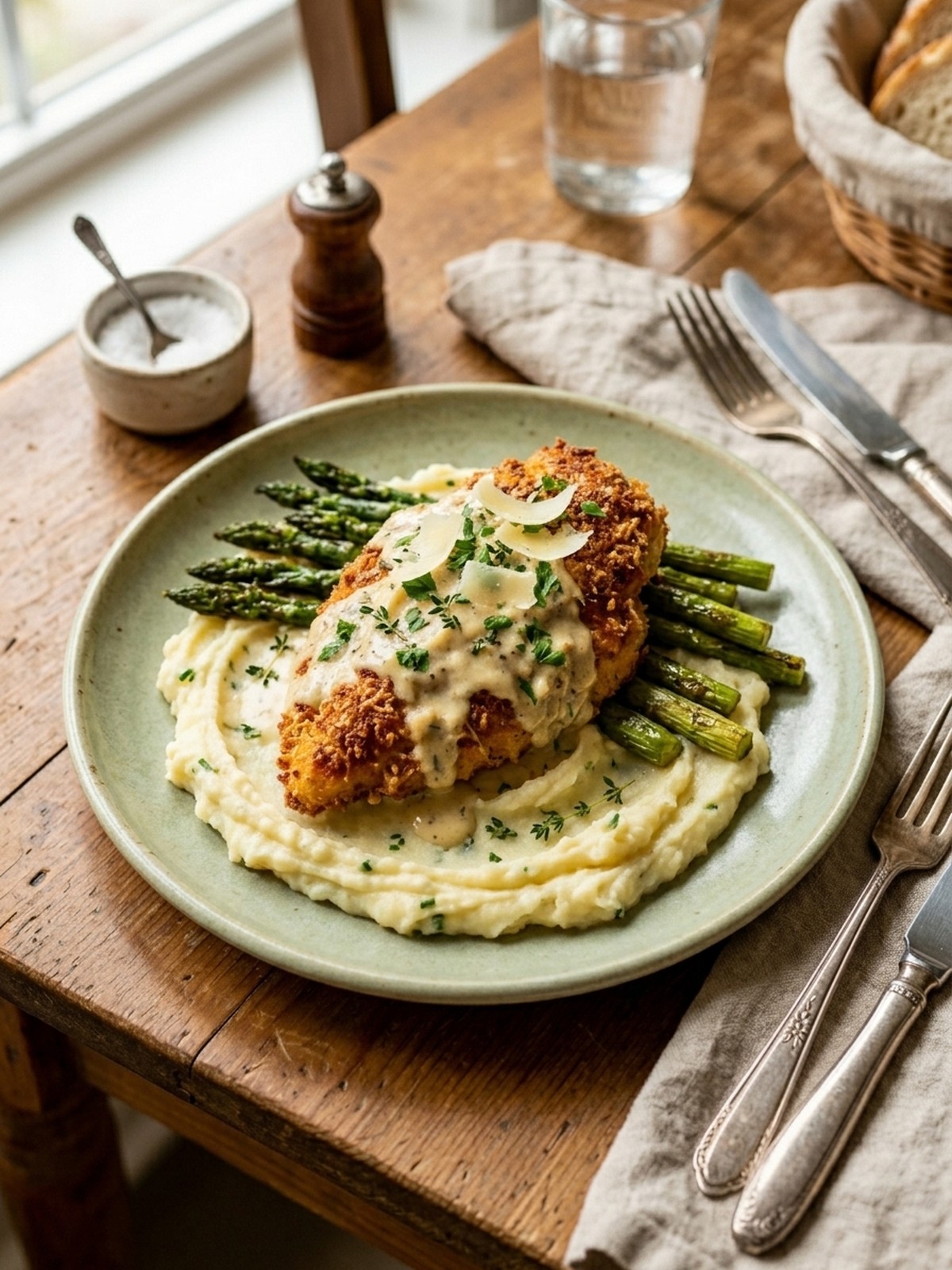
- Mashed potatoes: Creamy potatoes pair well with the garlic sauce and make the meal feel extra cozy.
- Roasted broccoli: Broccoli adds a crisp vegetable side that balances the richness of the Parmesan sauce.
- Cauliflower rice: This keeps the plate lighter while still giving the sauce something to settle into.
- Simple salad: A lemony green salad adds brightness beside the creamy chicken and crisp crust.
- Crusty bread: Bread is useful for scooping up extra garlic cream sauce from the plate.
FAQs
Yes. Use almond flour, crushed pork rinds, or regular breadcrumbs, though each option changes the crust texture slightly.
Boneless thighs work well, but they may need a few extra minutes depending on thickness. Cook them to 165°F.
Pat the chicken dry, brush lightly with oil, press the coating firmly, and avoid moving it too soon.
Milk can work, but the sauce will be thinner. Simmer gently and add Parmesan slowly for a smoother texture.
The original uses panko, so it is not strictly low carb. Use almond flour or pork rinds for that style.
Yes. Mushrooms, zucchini, or extra spinach work well. Cook firmer vegetables before adding cream and Parmesan.
Parmesan Crusted Chicken With Creamy Garlic Sauce
Equipment
- Large skillet
- Shallow bowl
- Tongs
- Instant-read thermometer
- Cutting Board
Ingredients
- 4 small-medium chicken breasts or 2 large breasts halved horizontally
- salt and pepper to taste
- 2 tablespoons olive oil divided for coating and cooking
- 1/2 cup grated Parmesan cheese for the crispy coating
- 1/2 cup panko breadcrumbs
- 3-4 cloves garlic minced
- 1 cup light cream or heavy cream
- 1 tablespoon Italian seasoning or oregano
- 1/2 cup grated Parmesan cheese for the creamy garlic sauce
- 1 cup spinach chopped optional
Instructions
- Pat the chicken dry, halve thick breasts if needed, and season both sides with salt and pepper.
- Combine the Parmesan cheese and panko breadcrumbs in a shallow bowl.
- Brush the chicken lightly with olive oil, then press the Parmesan-panko coating firmly onto both sides.
- Heat the remaining olive oil in a large skillet over medium heat and sear the chicken until golden on both sides.
- Cook until the thickest part of the chicken reaches 165°F, then move it to a plate.
- Lower the heat and add the garlic to the same skillet, stirring just until fragrant.
- Stir in the cream, Italian seasoning, Parmesan, and spinach if using, then simmer until smooth.
- Return the chicken briefly to the skillet and spoon the sauce around the crust before serving.