
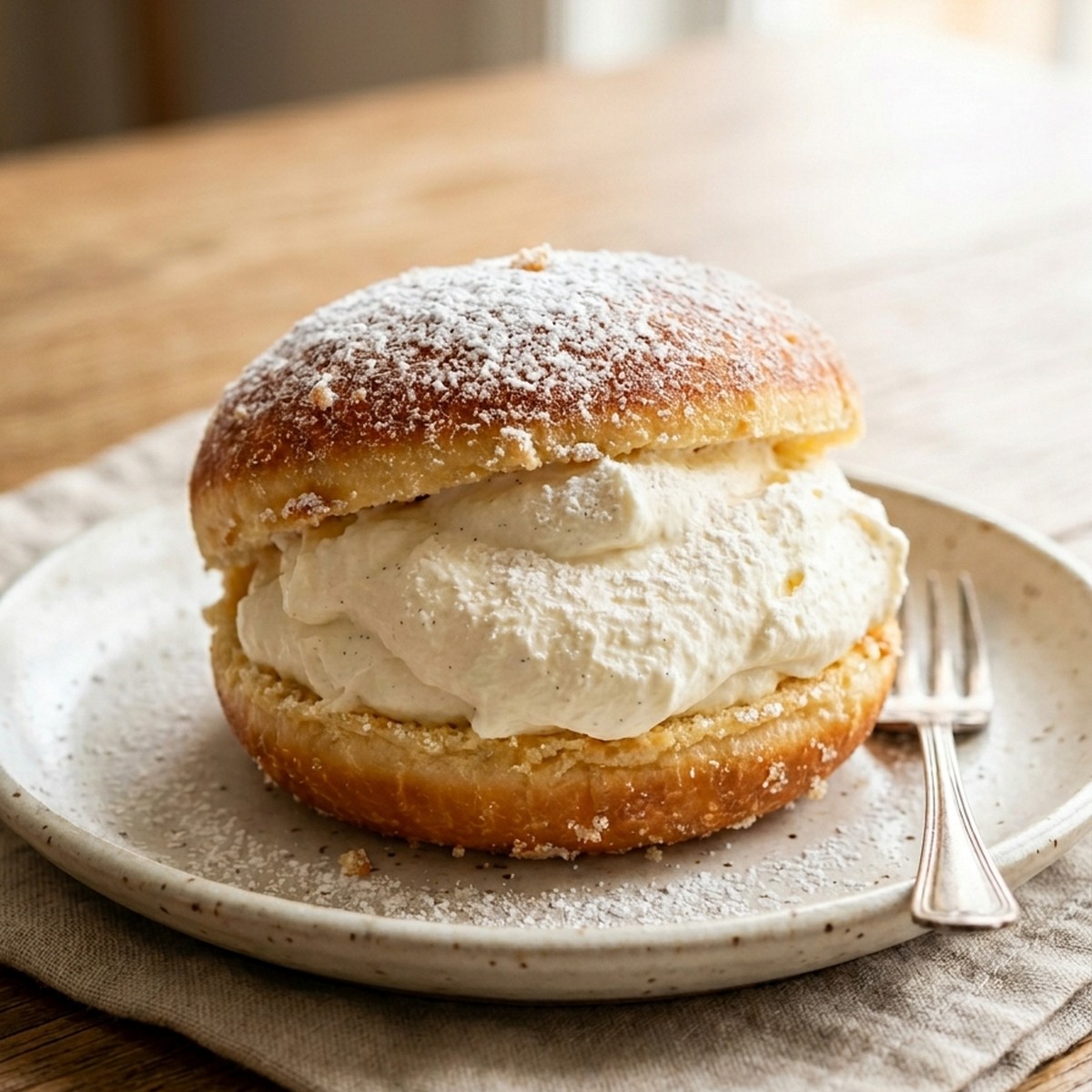
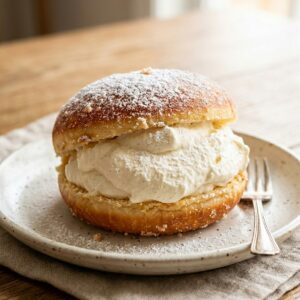
Korean Milk Cream Donut is a soft fried yeast donut filled with cold whipped milk cream and a gentle condensed milk sweetness. It brings that Asian bakery feel into a home kitchen with simple dough ingredients, a fluffy rise, and a chilled cream center that feels special without needing fancy equipment. I like this recipe for weekends, birthdays, dessert trays, or any time you want a bakery style dessert that can be made in stages. The dough uses warm milk, yeast, egg, butter, and flour, then fries into tender golden rounds. Once the donuts cool, the cream filling goes in so the contrast stays light and fresh. The key is patience during the rise and keeping the cream cold before piping.
| Serving Breakdown | |||
|---|---|---|---|
| 7gProtein | 25gFat | 47gCarbs | 435Calories |
Nutrition values are estimated per serving and may vary based on ingredients, brands, and portion size.
Why You’ll Love This Korean Milk Cream Donut
This recipe is all about soft dough, cool cream, and the joy of a fresh filled donut. Here’s why:
- Soft Bakery Texture: The yeast dough fries into a tender golden shell with a light chew, giving each donut that fresh bakery feel without complicated shaping.
- Cold Cream Center: Heavy cream, powdered sugar, and condensed milk make a smooth filling that stays fluffy and lightly sweet when the donuts are cooled first.
- Make-Ahead Friendly: You can prepare the dough earlier in the day, let it rise, and fill the donuts close to serving time for the best texture.
- Simple Ingredients: Flour, milk, yeast, egg, butter, sugar, and cream are grocery-store basics, but together they create a dessert that feels thoughtful and bakery style.
- Great for Sharing: These filled donuts look beautiful on a tray and work well for birthdays, brunch tables, after-dinner sweets, or weekend baking plans.
Ingredients You’ll Need
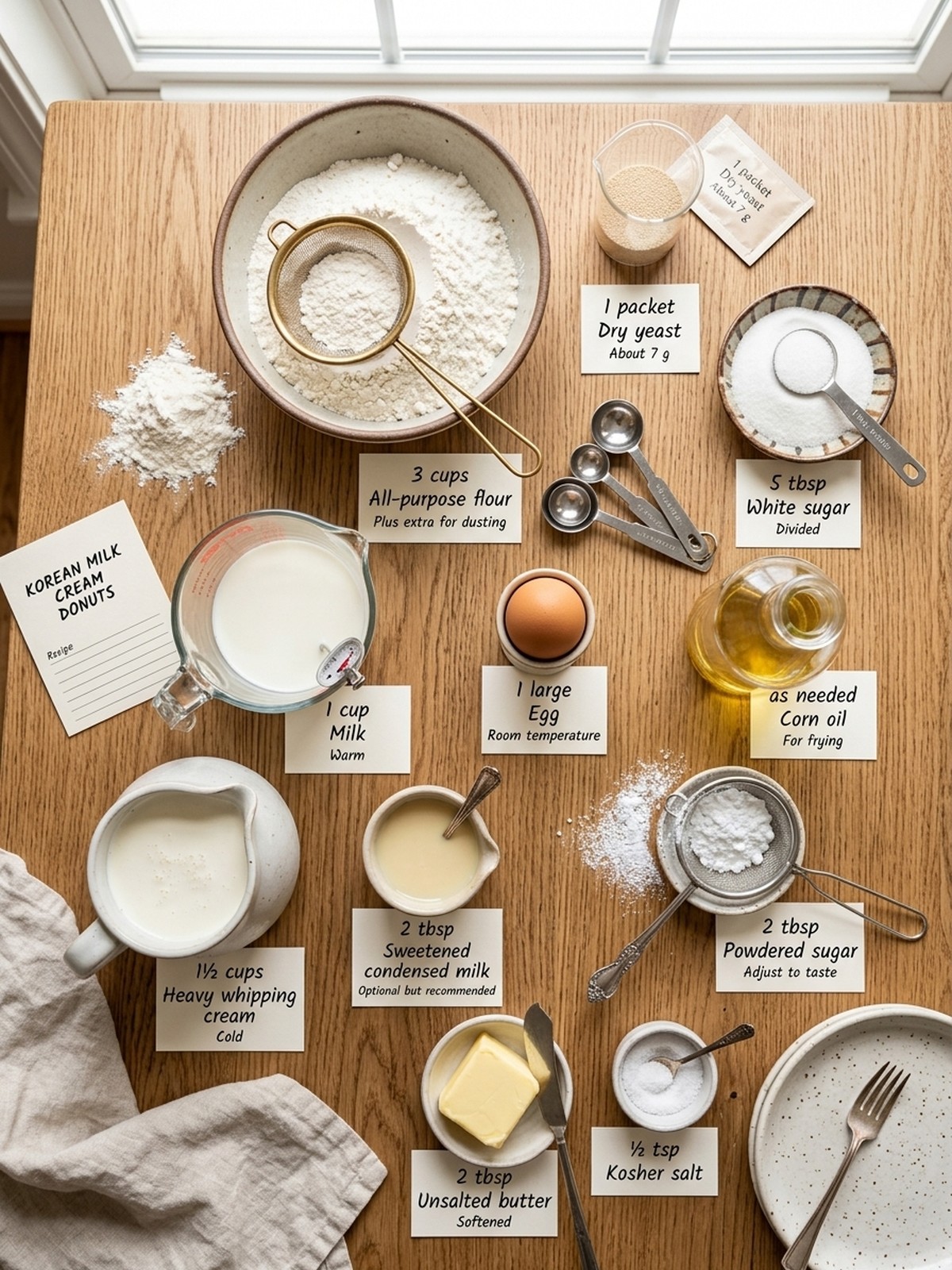
- All-purpose flour (3 cups): This gives the donut dough structure while still staying tender. Keep a little extra nearby for dusting the counter so the dough does not stick while shaping.
- Dry yeast (1 packet, about 7 g): Yeast helps the dough rise and creates that soft, airy center. Make sure it is fresh and foams slightly when mixed with warm milk and sugar.
- White sugar (5 tbsp, divided): Sugar lightly sweetens the dough and also helps activate the yeast. Dividing it keeps the dough balanced while leaving enough sweetness for the cream filling.
- Warm milk (1 cup): Milk makes the dough softer and richer than water. It should feel warm but not hot, because high heat can weaken or kill the yeast.
- Egg (1 large, room temperature): The egg adds richness and helps the dough hold together. Room temperature blends more smoothly into the yeasted dough than a cold egg.
- Unsalted butter (2 tbsp, softened): Butter gives the donuts a tender crumb and gentle flavor. Softened butter works into the dough more evenly than melted or cold butter.
- Kosher salt (1/2 tsp): Salt balances the sweetness and keeps the dough from tasting flat. Use a measured amount so the yeast still has room to rise properly.
- Corn oil (as needed): Corn oil has a neutral flavor and works well for frying. Use enough oil to let the donuts float without touching the bottom of the pot.
- Heavy whipping cream (1 1/2 cups, cold): Cold cream whips into a stable, fluffy filling. Keep it chilled until you are ready to beat and pipe it into the cooled donuts.
- Powdered sugar (2 tbsp): Powdered sugar sweetens the cream without leaving a grainy texture. You can adjust slightly depending on how sweet you like the filling.
- Sweetened condensed milk (2 tbsp, optional): Condensed milk gives the cream a smooth milk-sweet flavor that fits Korean bakery style desserts. It is optional, but I recommend it for the soft sweetness.
Before You Start
- Check the milk temperature: Warm milk should feel pleasantly warm, not hot. If it is too hot, the yeast may not rise well.
- Plan for rising time: This dough needs time to become puffy, so start before you need dessert on the table.
- Chill the cream tools: A cold bowl and beaters help the heavy cream whip faster and hold its shape for filling.
- Use a thermometer: Frying around 340°F to 350°F helps the donuts cook through without getting too dark outside.
I let the fried donuts cool fully before filling them because warm dough melts the cream quickly and makes the center heavy instead of fluffy.
How to Make Korean Milk Cream Donut
- Step 1 – Bloom Yeast: Stir warm milk, yeast, and 1 tablespoon sugar in a bowl, then rest until foamy and active.
- Step 2 – Mix Dough: Add flour, egg, softened butter, salt, and remaining dough sugar, then mix until a soft dough forms.
- Step 3 – Knead Dough: Knead on a lightly floured surface for 8 to 10 minutes until smooth, elastic, and slightly tacky.
- Step 4 – First Rise: Place dough in a greased bowl, cover, and let rise until doubled, about 60 to 75 minutes.
- Step 5 – Shape Donuts: Roll dough gently, cut into rounds or portions, and place on parchment squares for easier frying.
- Step 6 – Second Rise: Cover shaped donuts and let them puff for 25 to 35 minutes while the oil heats.
- Step 7 – Fry Donuts: Fry in hot oil until both sides are golden, then drain on a rack and cool completely.
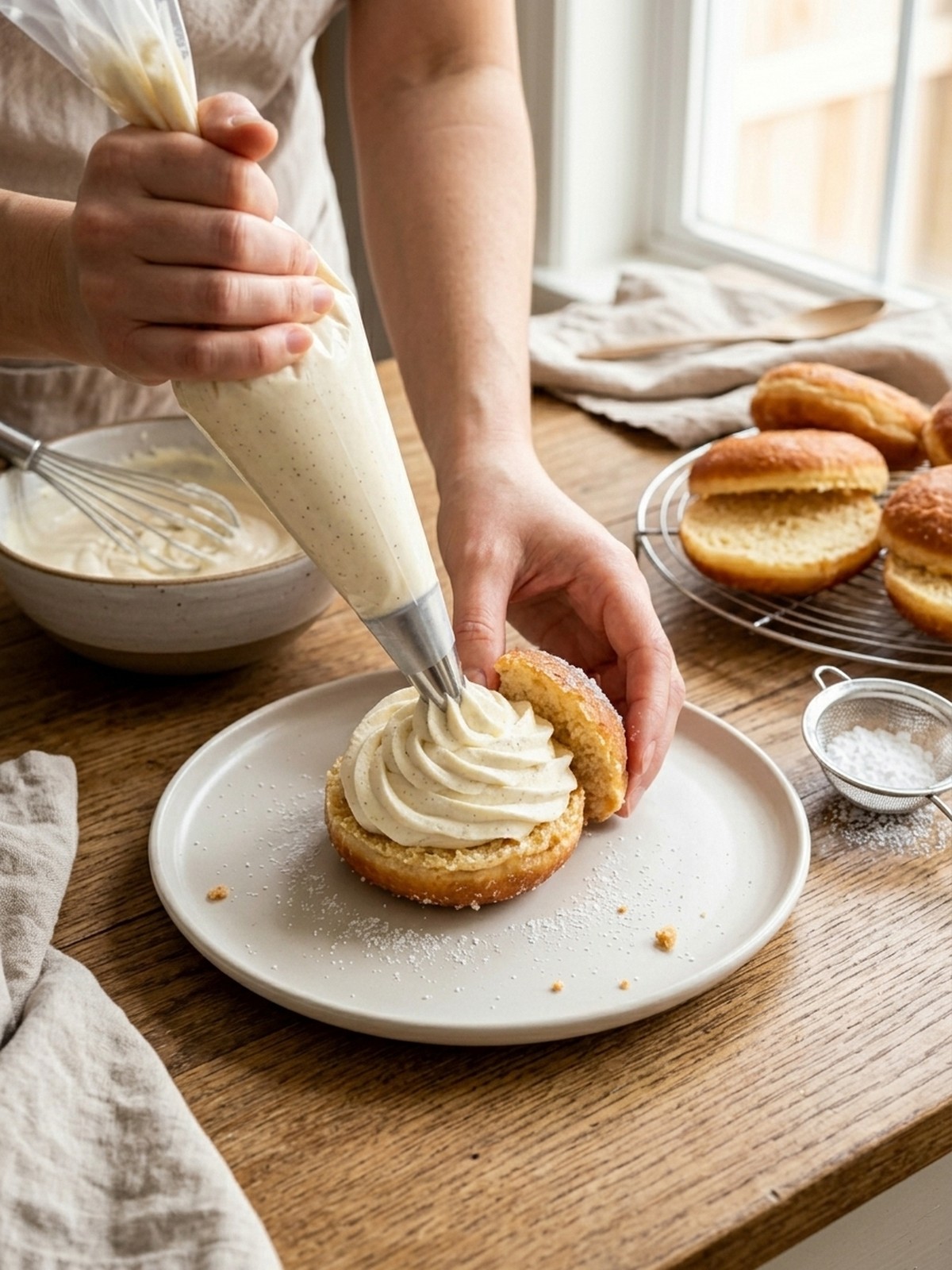
- Step 8 – Fill Cream: Whip cold cream, powdered sugar, and condensed milk, then pipe into split or pierced cooled donuts.
How to Know When Korean Milk Cream Donut Is Done
- Dough Rise: The dough should double and feel airy when gently pressed, not dense or tight.
- Oil Color Cue: Fried donuts should be evenly golden on both sides without dark patches or pale centers.
- Interior Texture: When cooled and split, the center should look fluffy and cooked through, not gummy.
- Cream Texture: The filling should hold soft peaks and pipe smoothly without running out of the donut.
Tips to Make It Easier
- Measure the flour carefully: I spoon flour into the measuring cup and level it so the dough stays soft instead of dry.
- Do not rush the rise: A warmer kitchen helps, but the dough should guide the timing more than the clock.
- Keep oil steady: I adjust the burner often during frying because oil temperature drops when dough is added.
- Drain on a rack: A wire rack keeps the outside from turning soggy while the donuts cool.
- Fill close to serving: The cream tastes best when it stays cold, fluffy, and freshly piped.
- Use parchment squares: They help move risen donuts into the oil without deflating the soft dough.
How to Store and Reheat
- Fridge: Store filled donuts in an airtight container in the refrigerator for up to 2 days.
- Freezer: Freeze unfilled fried donuts for up to 1 month, then thaw before adding fresh cream.
- Reheat: Do not heat cream-filled donuts. Let refrigerated donuts sit 10 minutes before serving for a softer bite.
- Unfilled donuts: Warm unfilled donuts briefly in a low oven before cooling again and filling.
- Food safety: Because the filling contains whipped cream, do not leave filled donuts at room temperature longer than 2 hours.
- Best texture: These donuts are at their best the day they are fried and filled.
Easy Swaps & Add-Ins
- Vanilla Cream: Add a small splash of vanilla extract to the whipped cream for a classic bakery flavor.
- Strawberry Cream: Fold finely chopped strawberries into the cream right before filling for a fruity version.
- Matcha Dusting: Dust the finished donuts lightly with matcha powdered sugar for a Korean cafe-style finish.
- Chocolate Drizzle: Add a thin drizzle of melted chocolate after filling for a richer dessert tray option.
- Cinnamon Sugar: Roll warm unfilled donuts in cinnamon sugar, then cool completely before adding cream.
- Less Sweet Filling: Skip the condensed milk and use only powdered sugar for a cleaner cream flavor.
What to Serve With Korean Milk Cream Donut
- Iced Coffee: The cool, slightly bitter coffee balances the sweet cream filling beautifully.
- Hot Milk Tea: Milk tea keeps the Asian bakery feeling and pairs well with the soft dough.
- Fresh Strawberries: Berries add brightness and make the plate feel lighter beside the cream filling.
- Green Tea: Unsweetened green tea cuts through the richness and keeps the dessert balanced.
- Fruit Salad: A small bowl of mixed fruit makes these donuts work nicely for brunch or dessert trays.
FAQs
Yes, let the dough rise once, cover it well, and refrigerate overnight. Shape, rise again, and fry the next day.
The oil was likely too hot. Keep it around 340°F to 350°F so the dough cooks evenly.
You can bake them, but the texture will be more like soft bread than a classic fried cream donut.
Use very cold heavy cream and stop whipping at firm peaks so it pipes cleanly without turning grainy.
Yes, split the cooled donuts with a knife and spoon the cream inside for a simple home version.
It adds smooth milk sweetness and helps the filling taste closer to Korean bakery cream desserts.
Korean Milk Cream Donut
Equipment
- Large mixing bowl
- Rolling Pin
- Deep heavy pot
- Kitchen thermometer
- Wire rack
- Hand Mixer
- Piping bag
Ingredients
- 3 cups all-purpose flour plus extra for dusting
- 1 packet dry yeast about 7 g
- 5 tbsp white sugar divided
- 1 cup milk warm, not hot
- 1 large egg room temperature
- 2 tbsp unsalted butter softened
- 1/2 tsp kosher salt
- corn oil as needed for frying
- 1 1/2 cups heavy whipping cream cold
- 2 tbsp powdered sugar adjusted to taste
- 2 tbsp sweetened condensed milk optional but recommended
Instructions
- Stir warm milk, yeast, and 1 tablespoon sugar in a large bowl, then rest for 5 to 10 minutes until foamy.
- Add flour, egg, softened butter, salt, and the remaining dough sugar, then mix until a soft dough forms.
- Knead the dough for 8 to 10 minutes until smooth, elastic, and slightly tacky.
- Transfer to a greased bowl, cover, and let rise for 60 to 75 minutes, or until doubled.
- Roll the dough gently, cut or portion into 10 donuts, and place each piece on parchment.
- Cover the shaped donuts and let them rise again for 25 to 35 minutes while heating oil to 340°F to 350°F.
- Fry the donuts in batches until golden on both sides, then drain on a wire rack and cool completely.
- Whip cold cream, powdered sugar, and condensed milk to firm peaks, then pipe into the cooled donuts.