
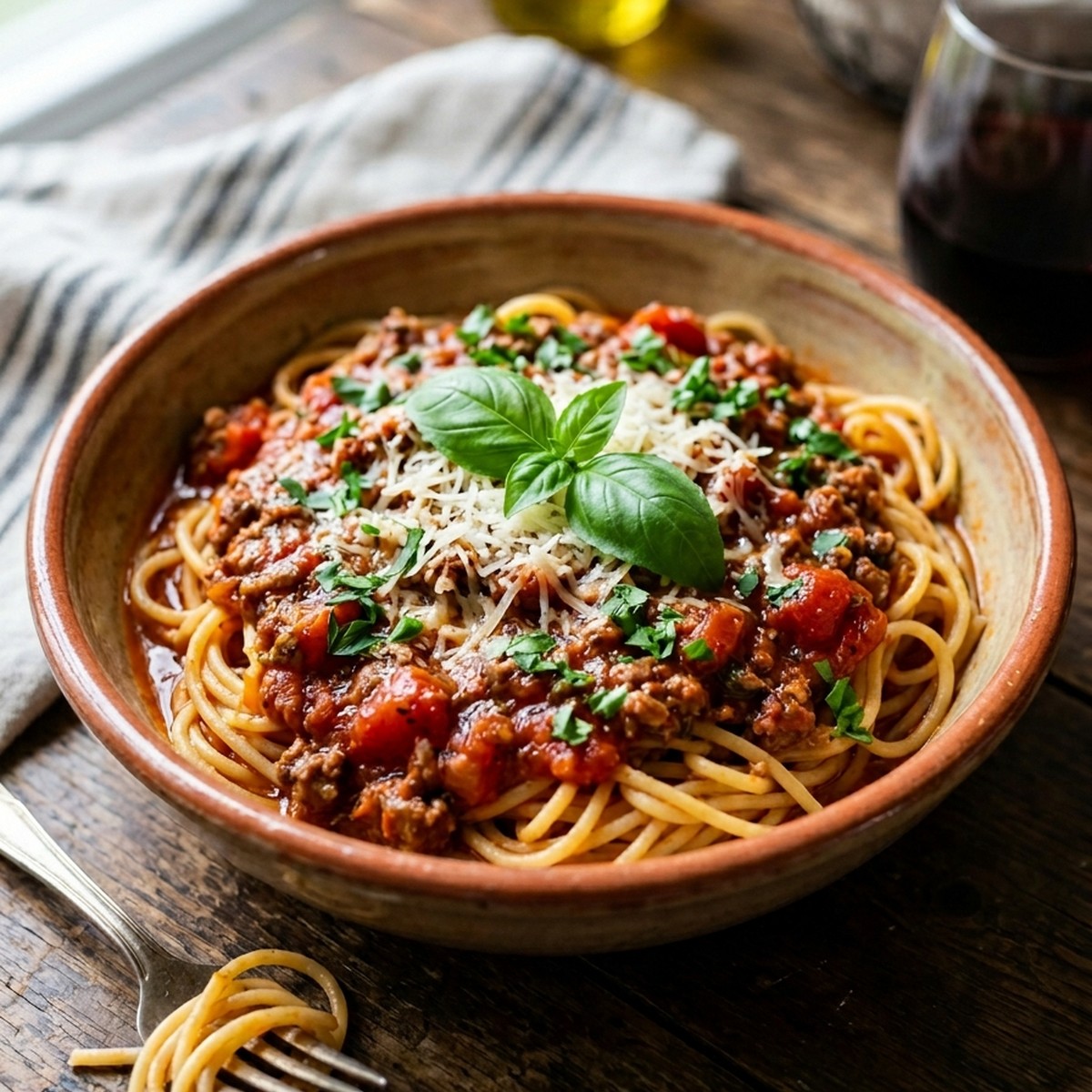
Homemade Spaghetti Sauce is one of those dependable dinner recipes I like to keep close for busy nights, Sunday meals, and freezer-friendly planning. This version starts with ground beef and diced onion, then builds a rich tomato base with tomato sauce, tomato paste, basil, Italian seasoning, garlic, Worcestershire sauce, and beef broth. The sauce simmers until it thickens into a hearty meat sauce that clings well to spaghetti noodles without feeling thin or watery. I like the small touch of sugar because it softens the acidity of the tomatoes, while red pepper flakes add just enough warmth. It is a practical family-style sauce that uses pantry seasonings and simple ingredients, but still tastes like something you took your time with.
| Serving Breakdown | |||
|---|---|---|---|
| 23gProtein | 13gFat | 17gCarbs | 282Calories |
Nutrition values are estimated per serving and may vary based on ingredients, brands, and portion size.
Why You’ll Love This Homemade Spaghetti Sauce
This sauce is hearty, practical, and built for real weeknight cooking. Here’s why:
- Classic Family Flavor: Ground beef, tomato sauce, tomato paste, onion, garlic, and basil create a familiar meat sauce that works well with spaghetti, baked pasta, or meal prep portions.
- Pantry-Friendly Ingredients: Most of the flavor comes from canned tomatoes, dried herbs, broth, and basic seasonings, so this is an easy dinner to plan without specialty shopping.
- Hearty Texture: Tomato paste and simmering time help the sauce thicken, while beef broth keeps it saucy enough to coat noodles evenly.
- Make-Ahead Helpful: The sauce stores well in the fridge and freezer, making it useful for future pasta dinners, lasagna layers, or quick reheated meals.
- Flexible Serving Options: Serve it over spaghetti noodles, spoon it into a pasta bake, or use it with garlic bread and a simple salad.
Ingredients You’ll Need
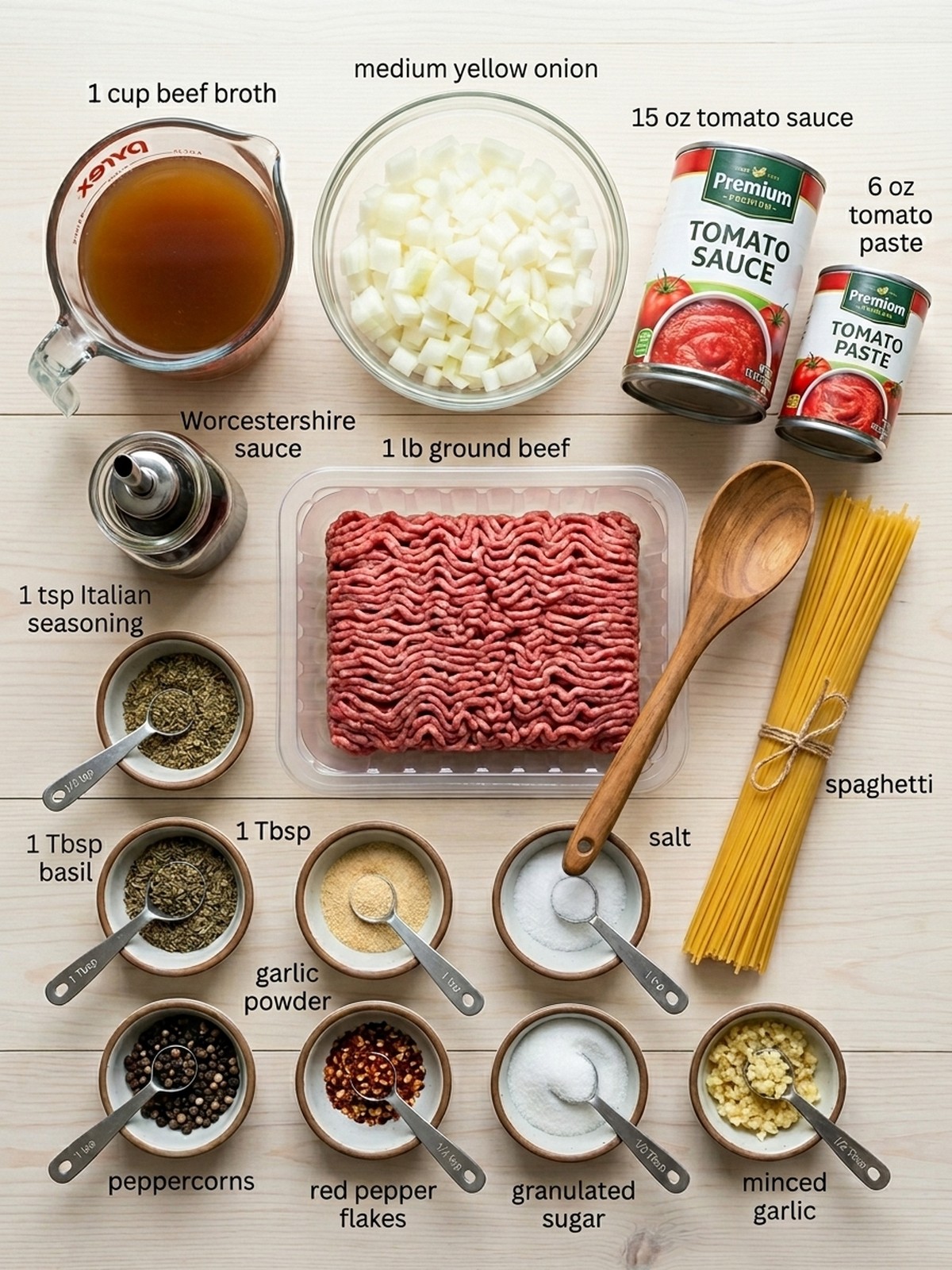
- Ground beef (1 lb.): Use regular or lean ground beef depending on how rich you want the sauce. Drain extra grease after browning for a cleaner finish.
- Yellow onion (1 medium, diced): Onion adds sweetness and depth as it cooks with the beef. Dice it small so it softens evenly into the sauce.
- Tomato sauce (15 oz.): This creates the main saucy base and keeps the texture smooth enough to coat spaghetti noodles well.
- Tomato paste (6 oz.): Tomato paste thickens the sauce and gives it a deeper tomato flavor after it cooks into the beef mixture.
- Italian seasoning (1/2 tsp.): A simple herb blend that supports the basil and gives the sauce a classic pasta-night flavor.
- Dried basil (1 Tbsp.): Basil brings a warm, slightly sweet herb note that works especially well with tomato sauces.
- Garlic powder (1 tsp.): Garlic powder spreads evenly through the sauce and adds steady flavor without overpowering the tomatoes.
- Salt and pepper (1 tsp. each): These season the beef and tomato base. Taste near the end before adding more salt.
- Red pepper flakes (1/4 tsp.): This adds gentle warmth, not heavy heat. Use less if cooking for children or sensitive eaters.
- Worcestershire sauce (1 Tbsp.): A small amount adds savory depth and helps the beef taste richer in the tomato sauce.
- Granulated sugar (1/2 Tbsp.): Sugar balances the acidity of the tomatoes and rounds out the sauce without making it sweet.
- Minced garlic (1/2 Tbsp.): Fresh minced garlic gives the sauce a stronger aroma and works nicely with the onion and beef.
- Beef broth (1 cup): Broth loosens the sauce while adding savory flavor. It also helps everything simmer together smoothly.
- Spaghetti noodles for serving: Cook the noodles separately until tender, then toss or top them with the finished sauce.
Before You Start
- Use a deep skillet: A wide skillet or Dutch oven gives the beef room to brown and prevents the sauce from bubbling over while simmering.
- Drain if needed: If your ground beef releases a lot of grease, drain it before adding the tomato ingredients.
- Cook noodles separately: This sauce is best simmered on its own, then served over freshly cooked spaghetti noodles.
- Keep it low: Once the sauce starts bubbling, lower the heat so it thickens gently without scorching on the bottom.
I like to let tomato paste cook with the beef and onion for a minute before adding broth. It deepens the tomato flavor and makes the sauce taste less flat.
How to Make Homemade Spaghetti Sauce?
- Step 1 – Brown Beef: Add ground beef to a deep skillet over medium heat and cook until mostly browned, breaking it into small crumbles.
- Step 2 – Add Onion: Stir in the diced onion and cook until softened, then drain excess grease if needed.
- Step 3 – Build Tomato Base: Add tomato sauce and tomato paste, stirring until the paste blends evenly into the beef mixture.
- Step 4 – Season Sauce: Stir in Italian seasoning, dried basil, garlic powder, salt, pepper, red pepper flakes, Worcestershire sauce, sugar, and minced garlic.
- Step 5 – Add Broth: Pour in beef broth and stir well, scraping the bottom of the pan to loosen any browned bits.
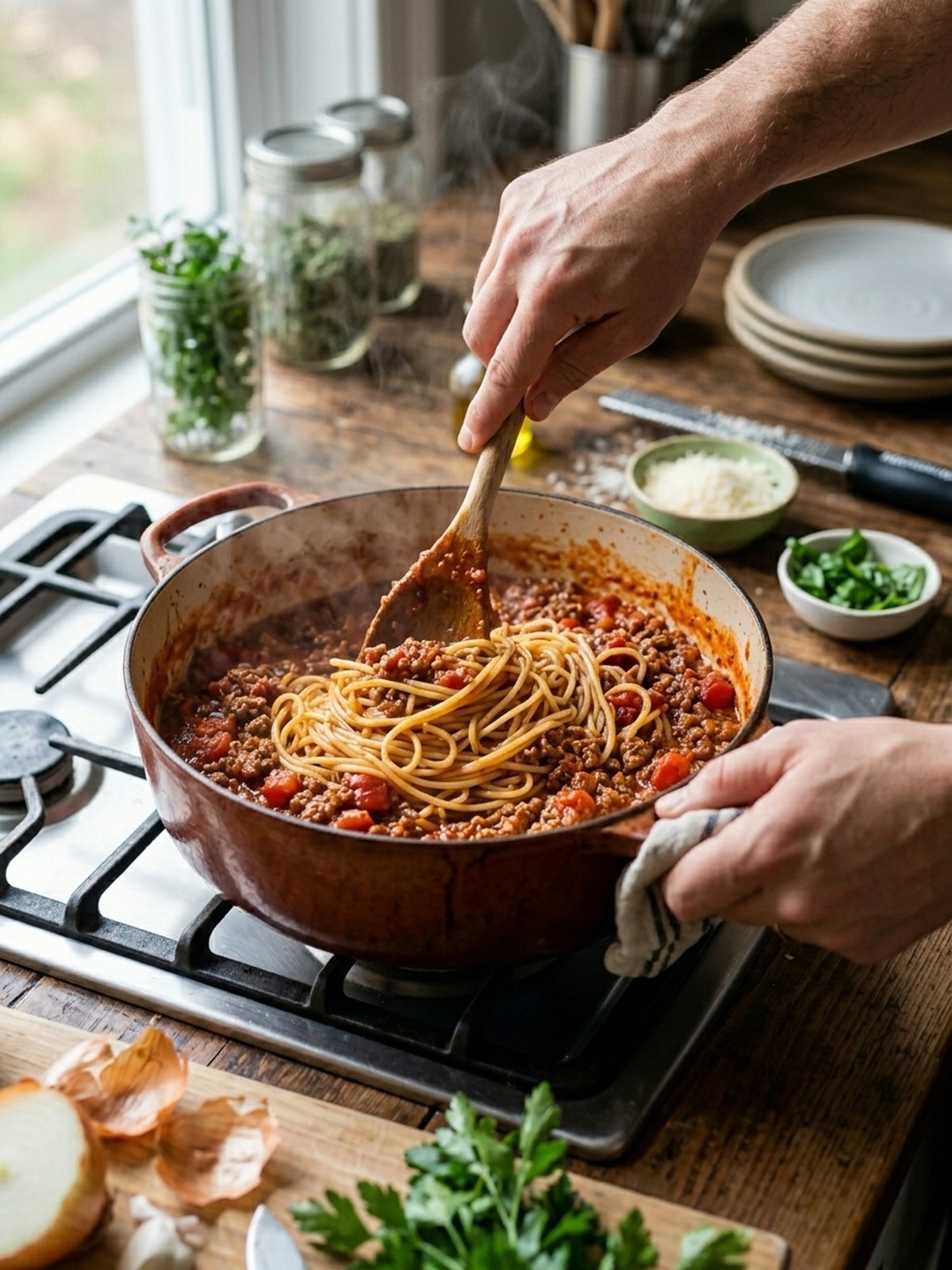
- Step 6 – Simmer Slowly: Reduce heat to low and simmer uncovered for 20 to 30 minutes, stirring occasionally until thickened.
- Step 7 – Cook Pasta: While the sauce simmers, cook spaghetti noodles according to package directions and drain well.
- Step 8 – Serve Warm: Taste the sauce, adjust seasoning if needed, then spoon it over hot spaghetti noodles.
How to Know When Homemade Spaghetti Sauce Is Done
- Thick Texture: The sauce should look glossy and thick enough to cling to a spoon instead of running like broth.
- Tender Onion: The diced onion should be soft with no sharp raw bite left in the sauce.
- Balanced Flavor: The tomato acidity should taste rounded, with savory beef flavor and gentle herb notes.
- Safe Beef: The ground beef should be fully cooked with no pink remaining before the sauce finishes simmering.
Tips to Make It Easier
- Use Lean Beef: I usually use lean ground beef when I want less draining and a cleaner sauce texture.
- Break Beef Small: Smaller beef crumbles spread through the sauce better and make every bite more balanced.
- Simmer Uncovered: Keeping the lid off helps extra liquid evaporate so the sauce becomes thicker and richer.
- Taste at the End: I wait until the sauce has simmered before adding more salt because the flavor concentrates as it cooks.
- Save Pasta Water: If the sauce gets too thick, a splash of pasta water can loosen it without watering down the flavor.
- Double the Batch: This sauce freezes well, so making extra can help with future spaghetti dinners or pasta bakes.
How to Store and Reheat
- Fridge: Store cooled sauce in an airtight container in the refrigerator for 3 to 4 days.
- Freezer: Freeze cooled sauce in freezer-safe bags or containers for up to 3 months.
- Reheat: Warm gently on the stovetop over medium-low heat, stirring often until hot throughout.
- Microwave: Reheat individual portions in a covered microwave-safe bowl, stirring halfway through for even heating.
- Food safety: Refrigerate leftovers within 2 hours and reheat to 165°F before serving again.
- Noodles: Store sauce and spaghetti separately when possible so the pasta does not absorb too much liquid.
Easy Swaps & Add-Ins
- Ground Turkey: Swap ground beef for ground turkey if you want a lighter meat sauce with a milder flavor.
- Italian Sausage: Replace half the beef with mild Italian sausage for a bolder pasta sauce.
- Extra Vegetables: Add diced bell pepper, mushrooms, or grated carrot while cooking the onion for more texture.
- More Heat: Increase the red pepper flakes slightly if you want a warmer sauce.
- Herb Finish: Stir in chopped fresh parsley or basil right before serving for a brighter finish.
- Cheesy Finish: Top each bowl with Parmesan or mozzarella for a cozy spaghetti dinner.
What to Serve With Homemade Spaghetti Sauce
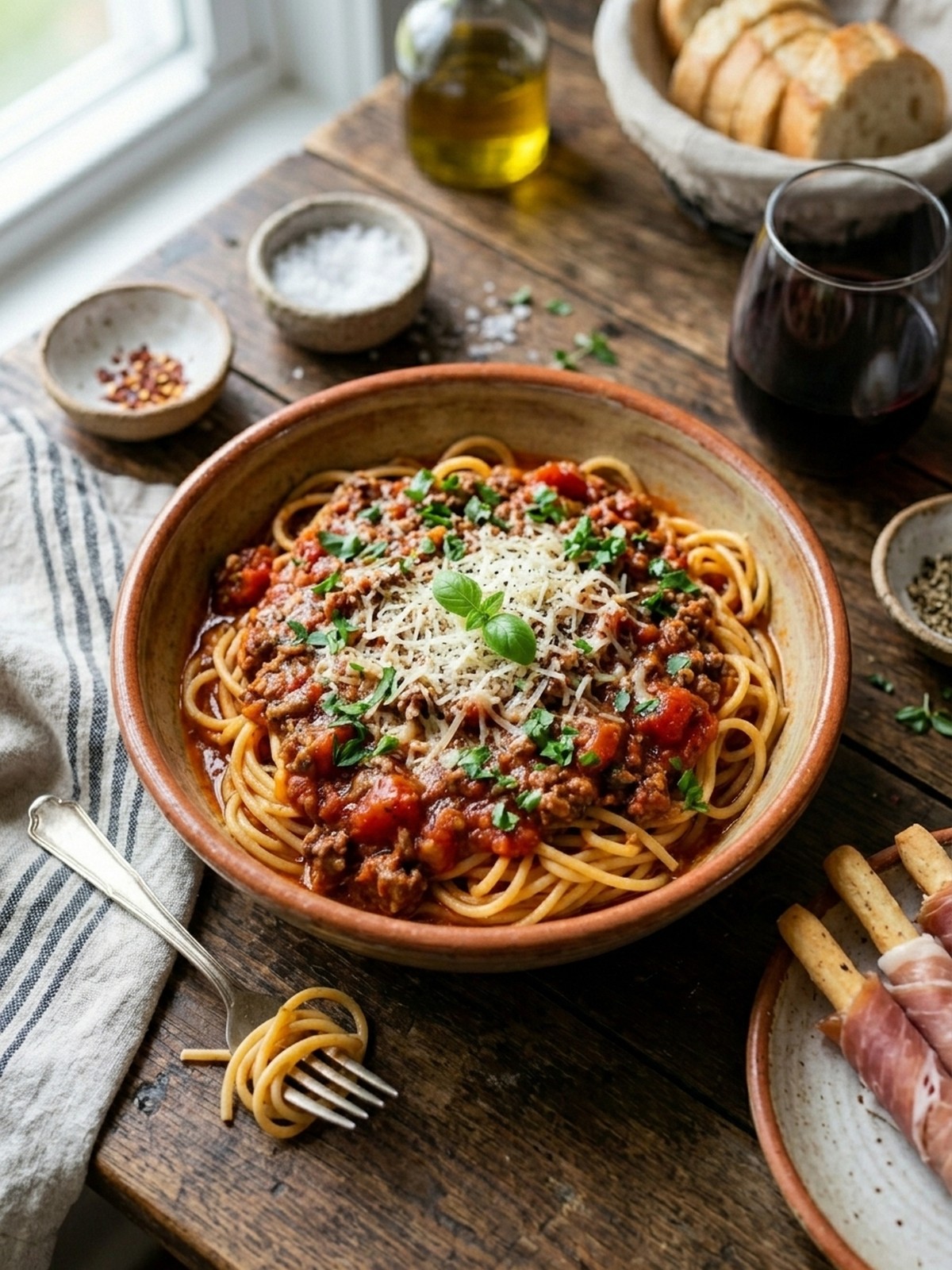
- Spaghetti Noodles: The classic choice, especially when cooked just until tender and topped with plenty of sauce.
- Garlic Bread: A crisp slice of garlic bread is useful for scooping up extra meat sauce.
- Green Salad: A simple salad with lettuce, cucumber, and vinaigrette balances the hearty sauce.
- Roasted Vegetables: Roasted broccoli, zucchini, or green beans add color and freshness to the plate.
- Parmesan Cheese: A sprinkle of Parmesan adds salty flavor and works well with the tomato base.
- Baked Pasta: Use leftover sauce with cooked pasta and cheese for a simple casserole-style meal.
FAQs
Yes, this sauce is great for making ahead. Store it in the fridge for 3 to 4 days and reheat gently.
Yes, cool the sauce completely, then freeze it in airtight containers or freezer bags for up to 3 months.
No, but a small amount helps balance tomato acidity. You can reduce it or leave it out if preferred.
Simmer it uncovered over low heat, stirring often, until extra liquid evaporates and the sauce coats a spoon.
Yes, this hearty meat sauce works well in lasagna, baked ziti, stuffed shells, or other pasta bakes.
You can serve it on top or toss it with noodles. Storing sauce separately keeps leftovers from getting too soft.
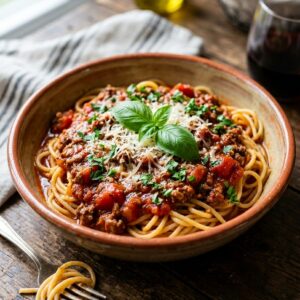
Homemade Spaghetti Sauce
Equipment
- Large skillet or Dutch oven
- Wooden spoon
- Measuring spoons
- Large pasta pot
- Colander
Ingredients
- 1 lb. ground beef
- 1 medium yellow onion diced
- 15 oz. tomato sauce
- 6 oz. tomato paste
- 1/2 tsp. Italian seasoning
- 1 Tbsp. dried basil
- 1 tsp. garlic powder
- 1 tsp. salt
- 1 tsp. pepper
- 1/4 tsp. red pepper flakes
- 1 Tbsp. Worcestershire sauce
- 1/2 Tbsp. granulated sugar
- 1/2 Tbsp. minced garlic
- 1 cup beef broth
- spaghetti noodles for serving
Instructions
- Add ground beef to a large skillet or Dutch oven over medium heat and cook until mostly browned, breaking it into small crumbles.
- Stir in diced onion and cook until softened, then drain excess grease if needed.
- Add tomato sauce and tomato paste, stirring until the paste blends into the beef and onion mixture.
- Stir in Italian seasoning, dried basil, garlic powder, salt, pepper, red pepper flakes, Worcestershire sauce, sugar, and minced garlic.
- Pour in beef broth and stir well, scraping up any browned bits from the bottom of the pan.
- Reduce heat to low and simmer uncovered for 20 to 30 minutes, stirring occasionally, until thickened.
- Cook spaghetti noodles according to package directions while the sauce simmers, then drain well.
- Taste the sauce, adjust seasoning if needed, and serve warm over spaghetti noodles.