
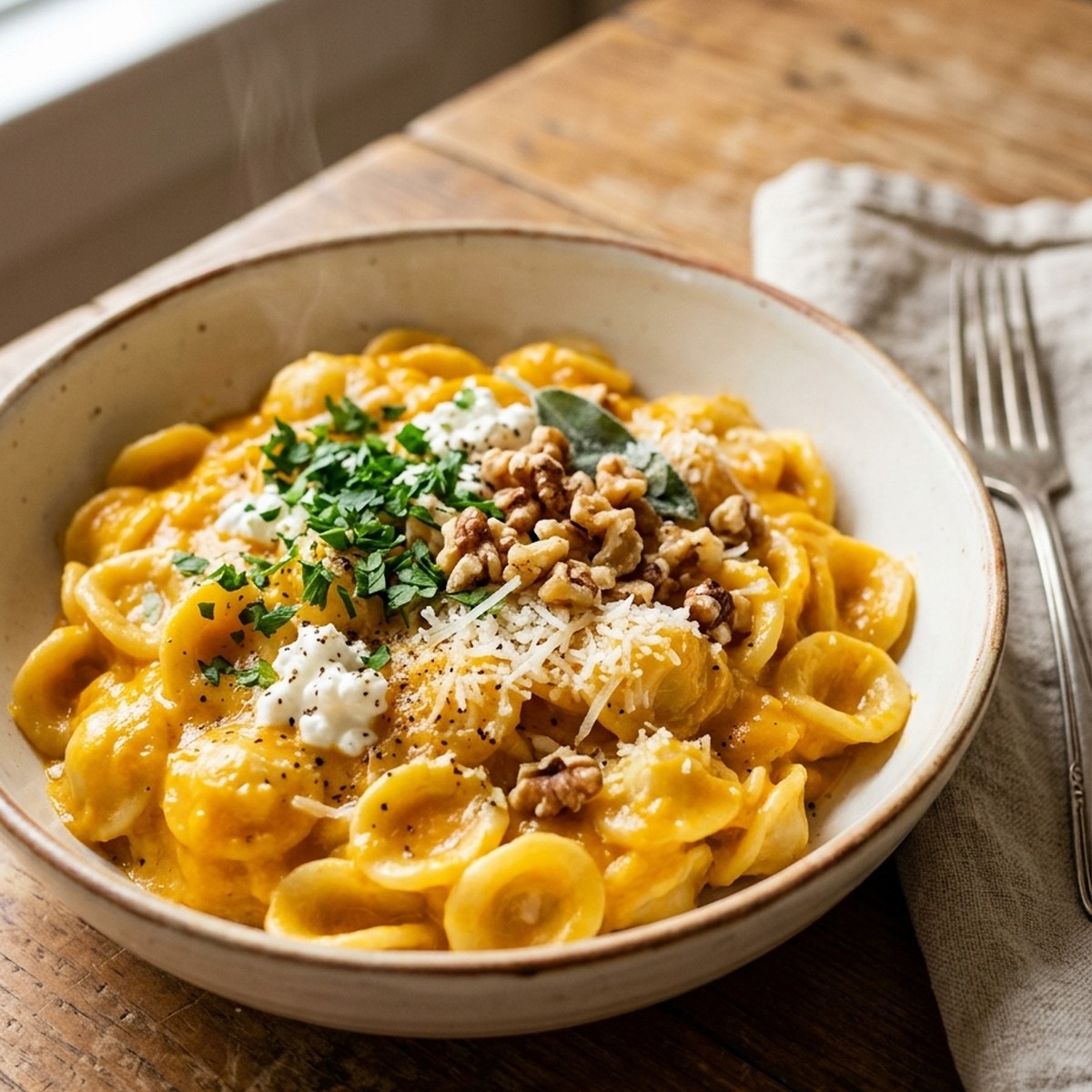
High Protein Butternut Squash Cottage Cheese Pasta is a creamy vegetarian pasta dinner made with roasted squash, cottage cheese, parmesan, and fresh basil. It gives you a smooth veggie-forward sauce with a little extra protein from the cottage cheese, so it feels cozy enough for dinner and practical enough for lunch leftovers. I like this recipe when I want pasta that still brings color and substance to the table without relying on a heavy cream sauce. The squash gets tender with garlic and onion, then blends into a golden sauce that clings to every piece of pasta. Sage, thyme, paprika, and basil keep the flavor warm and balanced. Use your favorite pasta shape, save that salty pasta water, and adjust the broth until the sauce looks just right.
| Serving Breakdown | |||
|---|---|---|---|
| 17gProtein | 9gFat | 68gCarbs | 410Calories |
Nutrition values are estimated per serving and may vary based on ingredients, brands, and portion size.
Why You’ll Love This High Protein Butternut Squash Cottage Cheese Pasta
This pasta brings together a creamy fall-style sauce and a practical weeknight dinner format. Here’s why:
- Creamy Without Heavy Cream: Cottage cheese blends with roasted butternut squash, parmesan, broth, and pasta water for a smooth sauce that feels rich without needing cream.
- Vegetarian Dinner Value: The pasta, squash, cottage cheese, and parmesan make a satisfying meatless meal with color, comfort, and steady staying power.
- Good for Leftovers: The sauce reheats nicely when loosened with a splash of broth or water, which makes it helpful for lunch the next day.
- Balanced Flavor: Sage, thyme, paprika, garlic, onion, and basil give the sauce warmth and freshness without making the ingredient list complicated.
- Flexible Pasta Choice: Use shells, rigatoni, rotini, penne, or a higher-protein pasta if that is what you already keep in the pantry.
Ingredients You’ll Need
- Small butternut squash (3 to 4 cups cubed): This is the base of the sauce and gives the pasta its golden color, natural sweetness, and smooth body.
- Garlic (4 cloves): Roasting the garlic softens its sharpness and helps it blend into the sauce with a warm savory finish.
- Sweet or yellow onion (¼ onion): A small amount adds gentle sweetness and depth without overpowering the butternut squash.
- Oil (1 tablespoon): I use olive oil or avocado oil to help the squash roast evenly and keep the edges from drying out.
- Salt and black pepper (to taste): Season the vegetables before roasting and remember that the pasta water should be well salted.
- Garlic powder (½ teaspoon): This reinforces the garlic flavor in the sauce and keeps the pasta from tasting flat.
- Sage (½ teaspoon): Sage pairs naturally with butternut squash and gives the sauce a cozy savory note.
- Paprika (½ teaspoon): Paprika adds mild warmth and helps round out the sweetness of the squash.
- Thyme (½ teaspoon): Thyme brings a gentle earthy flavor that works well with the roasted vegetables.
- Cottage cheese (½ cup): Blend it into the warm squash mixture for creaminess and extra protein in the sauce.
- Reserved pasta water (½ cup): I use heavily salted pasta water because the starch helps the sauce cling to the noodles.
- Vegetable broth (½ cup): Broth loosens the sauce and adds flavor; use bone broth if you want a higher-protein non-vegetarian option.
- Grated parmesan (½ cup): Parmesan adds salty richness and helps the sauce taste rounded and savory.
- Basil (½ cup finely chopped): Fresh basil brightens the finished pasta and keeps the sauce from tasting too heavy.
- Cooked pasta (one 16-ounce package): Short pasta shapes hold this sauce well, especially shells, rigatoni, penne, or rotini.
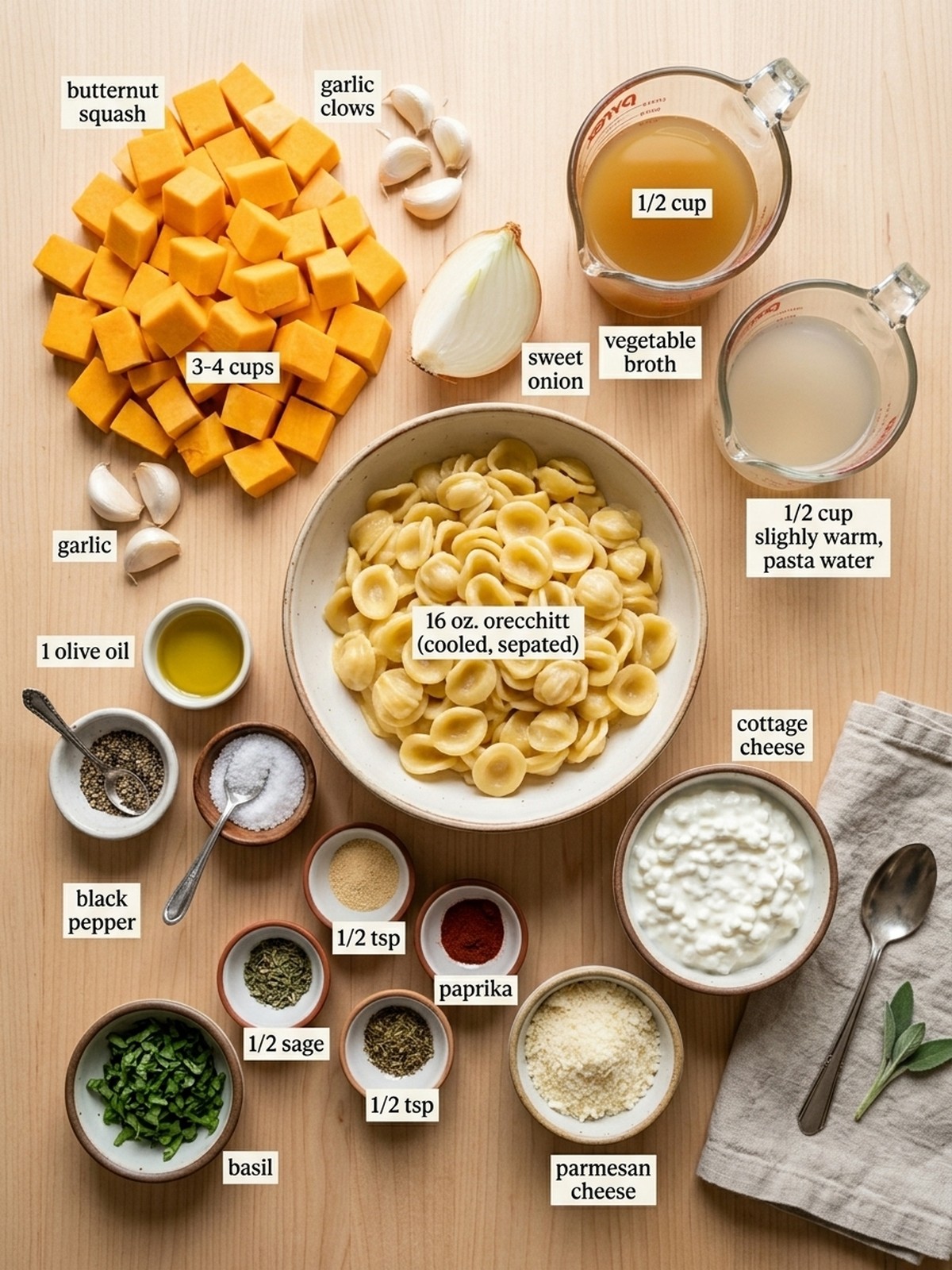
Before You Start
- Cut Even Pieces: Cube the squash into similar sizes so it roasts evenly and blends smoothly.
- Salt the Pasta Water: The reserved water seasons the sauce, so make it taste noticeably salty before adding pasta.
- Use a Blender: A high-speed blender gives the smoothest sauce, but an immersion blender can work with extra broth.
- Save Extra Broth: Keep more broth nearby so you can thin the sauce after blending or reheating.
I let the roasted squash cool for a few minutes before blending with cottage cheese so the sauce stays creamy and the blender handles it safely.
How to Make High Protein Butternut Squash Cottage Cheese Pasta
- Step 1 – Heat Oven: Preheat the oven to 400°F and line a sheet pan with parchment for easier cleanup.
- Step 2 – Season Squash: Toss squash, garlic, onion, oil, salt, pepper, garlic powder, sage, paprika, and thyme on the pan.
- Step 3 – Roast Vegetables: Roast for 25 to 30 minutes, turning once, until the squash is fork-tender and lightly browned.
- Step 4 – Cook Pasta: Boil the pasta until tender, then reserve ½ cup heavily salted pasta water before draining.
- Step 5 – Blend Sauce: Blend roasted vegetables with cottage cheese, broth, parmesan, and pasta water until smooth and creamy.
- Step 6 – Toss Pasta: Add pasta to a large pot or skillet, pour in the sauce, and stir over low heat until coated.
- Step 7 – Finish Fresh: Stir in chopped basil, adjust salt and pepper, and loosen with extra broth if needed.
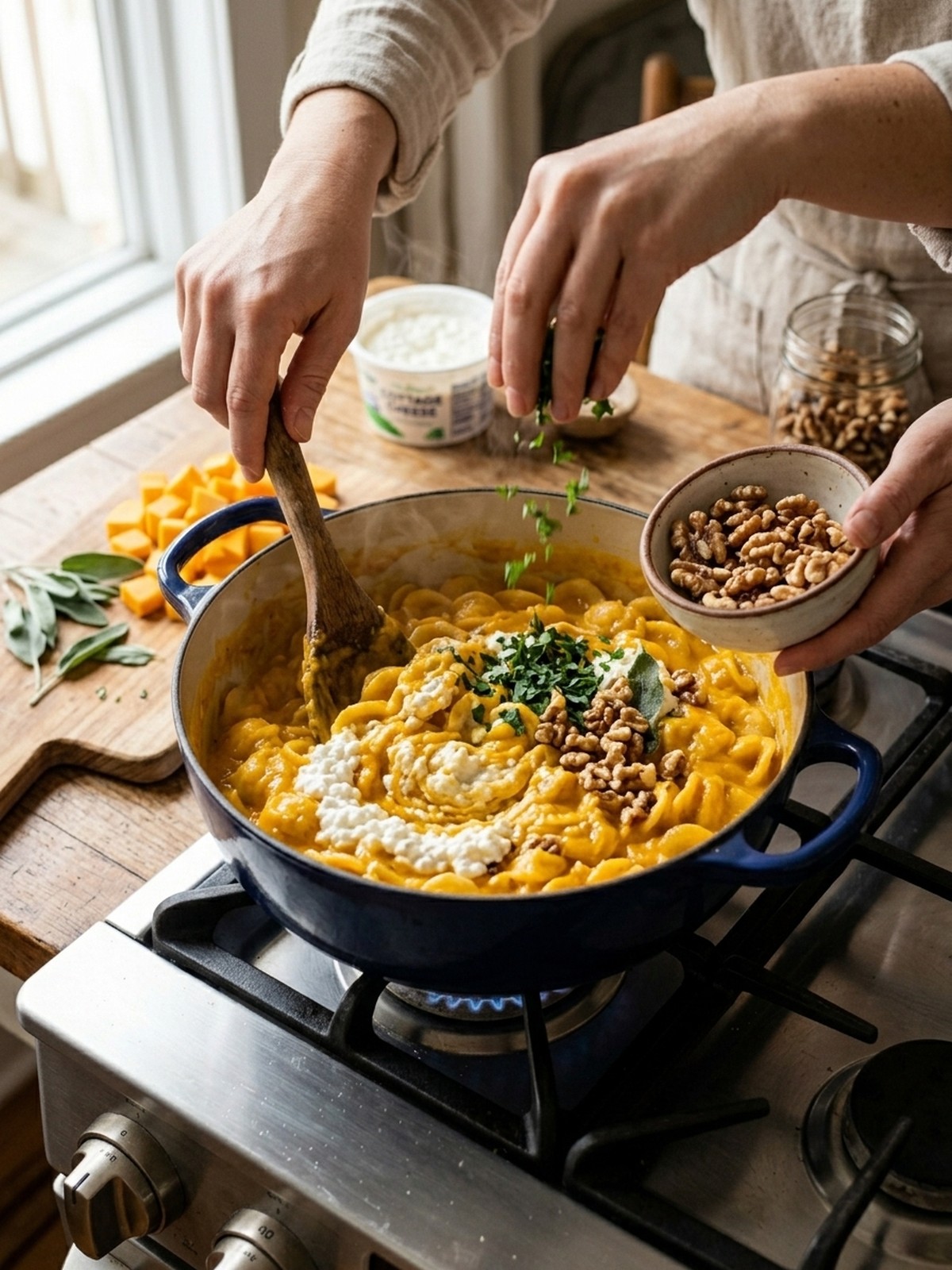
How to Know When High Protein Butternut Squash Cottage Cheese Pasta Is Done
- Squash Texture: The roasted squash should be fork-tender with lightly browned edges before blending.
- Sauce Consistency: The sauce should look smooth, creamy, and loose enough to coat the pasta without clumping.
- Pasta Coating: Every piece of pasta should be glossy and evenly covered after tossing over low heat.
- Final Taste: The finished pasta should taste balanced, with enough salt, pepper, basil, and parmesan in each bite.
Tips to Make It Easier
- Use Pre-Cut Squash: I use peeled cubed squash from the produce section when I want to save prep time.
- Blend in Batches: If your blender is small, blend half the sauce at a time so it stays smooth and safe.
- Choose Short Pasta: Ridges and curves hold the sauce better than long thin noodles.
- Warm the Sauce Gently: Keep the heat low after adding cottage cheese so the sauce stays creamy.
- Adjust the Thickness: I usually add broth one splash at a time until the sauce coats a spoon nicely.
- Finish With Basil Last: Stir basil in at the end so it stays fresh and green.
How to Store & Reheat
- Fridge: Store cooled pasta in an airtight container for 3 to 4 days.
- Freezer: Freeze the sauce separately for up to 2 months; cooked pasta can soften after freezing.
- Reheat: Warm gently on the stove or in the microwave with a splash of broth, milk, or water.
- Meal Prep: Keep basil separate until serving if you want the freshest flavor after reheating.
- Food Safety: Refrigerate leftovers within 2 hours and reheat until steaming hot before serving.
Easy Swaps & Add-Ins
- Protein Pasta: Use chickpea, lentil, or higher-protein pasta if you want a stronger protein angle.
- Bone Broth: Swap vegetable broth for bone broth if the meal does not need to stay vegetarian.
- Greens: Stir in baby spinach or chopped kale after tossing the pasta with sauce.
- Extra Heat: Add red pepper flakes or a pinch of cayenne for a warmer finish.
- More Cheese: Add a little extra parmesan on top for a saltier, richer pasta bowl.
- Different Herbs: Use parsley or chives if basil is not available.
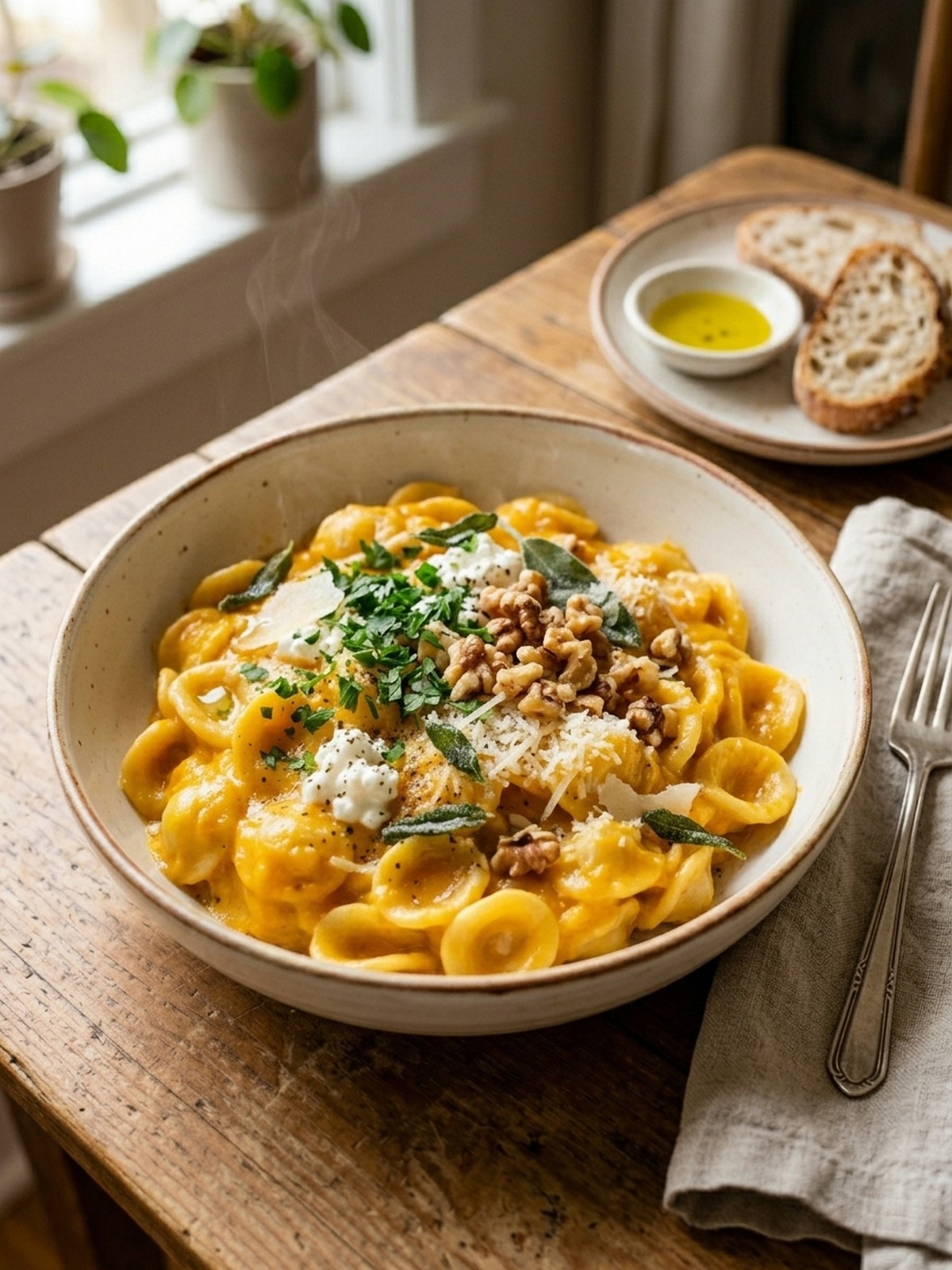
What to Serve With High Protein Butternut Squash Cottage Cheese Pasta
- Green Salad: A crisp salad with lemon dressing balances the creamy squash sauce.
- Roasted Broccoli: Broccoli adds texture and keeps the meal vegetable-forward.
- Garlic Green Beans: Green beans cook fast and pair well with parmesan and basil.
- Tomato Cucumber Salad: Fresh tomatoes bring brightness beside the warm pasta.
- Grilled Chicken: Serve chicken on the side if your table wants extra protein.
- Crusty Bread: Bread is helpful for scooping up any sauce left in the bowl.
FAQs
Yes. Make the sauce ahead and store it separately, then toss with freshly cooked pasta for the best texture.
It should blend smooth when combined with warm squash, broth, parmesan, and pasta water in a strong blender.
Short shapes like shells, rigatoni, penne, and rotini hold the creamy sauce well.
Yes. Thaw and pat it dry first, then roast until tender and lightly browned.
Use higher-protein pasta, add grilled chicken on the side, or use bone broth if vegetarian is not required.
Yes. Add extra broth or reserved pasta water a small splash at a time until it coats the pasta smoothly.
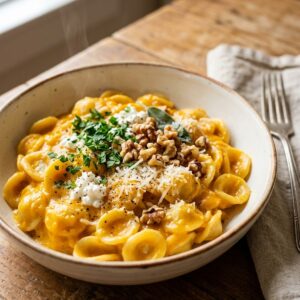
High Protein Butternut Squash Cottage Cheese Pasta
Equipment
- Sheet pan
- Large Pot
- Blender
- Large skillet or saucepan
- Knife and Cutting Board
Ingredients
- 1 small butternut squash roughly cubed, about 3 to 4 cups
- 4 cloves garlic
- 1/4 sweet or yellow onion
- 1 tablespoon oil
- salt to taste
- black pepper to taste
- 1/2 teaspoon garlic powder
- 1/2 teaspoon sage
- 1/2 teaspoon paprika
- 1/2 teaspoon thyme
- 1/2 cup cottage cheese
- 1/2 cup reserved pasta water heavily salted
- 1/2 cup vegetable broth plus more as needed
- 1/2 cup grated parmesan
- 1 16-ounce package cooked pasta of choice
- 1/2 cup basil finely chopped
Instructions
- Preheat the oven to 400°F and line a sheet pan with parchment for easier cleanup.
- Toss the cubed squash, garlic, onion, oil, salt, pepper, garlic powder, sage, paprika, and thyme on the prepared pan.
- Roast for 25 to 30 minutes, turning once, until the squash is fork-tender and lightly browned.
- Cook the pasta until tender, then reserve ½ cup heavily salted pasta water before draining.
- Blend the roasted vegetables with cottage cheese, broth, parmesan, and reserved pasta water until smooth.
- Toss the pasta with the sauce over low heat, adding extra broth as needed until creamy.
- Stir in the chopped basil, adjust salt and pepper, and serve warm.